
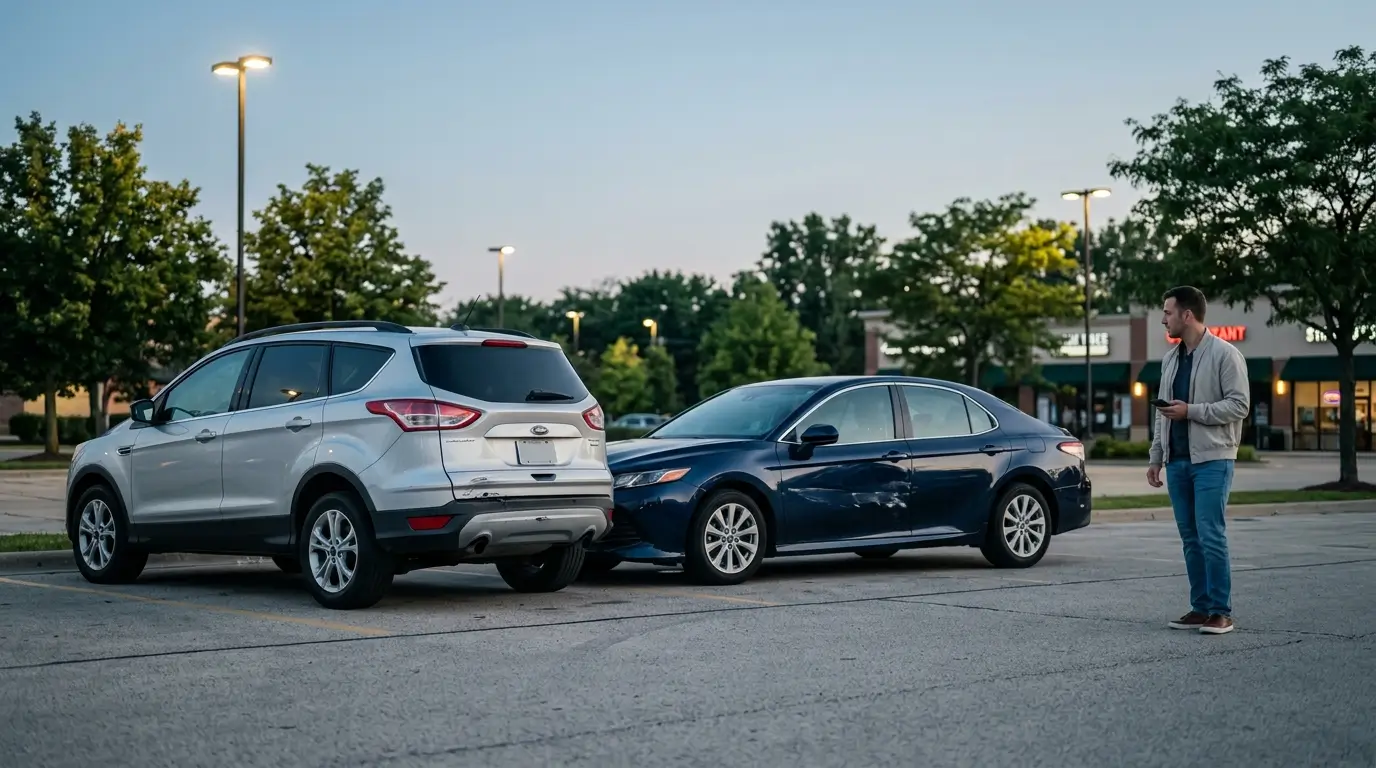
Leaving the scene of an accident can create criminal, driving, and financial consequences when a driver does not satisfy duties required under Illinois law. What the law requires can differ depending on whether the accident involves property damage, an unattended vehicle, injury, or death.
A driver who leaves because of panic, confusion, or fear should not assume that the situation is beyond repair. What happens next depends on the facts, including what occurred during the collision, what the driver knew, whether anyone was injured, and what happened after the driver left.
What Does Illinois Law Require After an Accident?
Illinois law imposes duties on drivers involved in accidents. The exact obligations depend on the type and seriousness of the crash.
Depending on the circumstances, a driver may be required to:
- stop and remain at or return to the scene;
- provide identifying and vehicle information;
- exchange information with another driver or property owner;
- provide reasonable assistance when someone may be injured;
- notify law enforcement or emergency services when required; and
- take specific steps when damaged property is unattended.
The important point is that the duties are not necessarily identical in every accident.
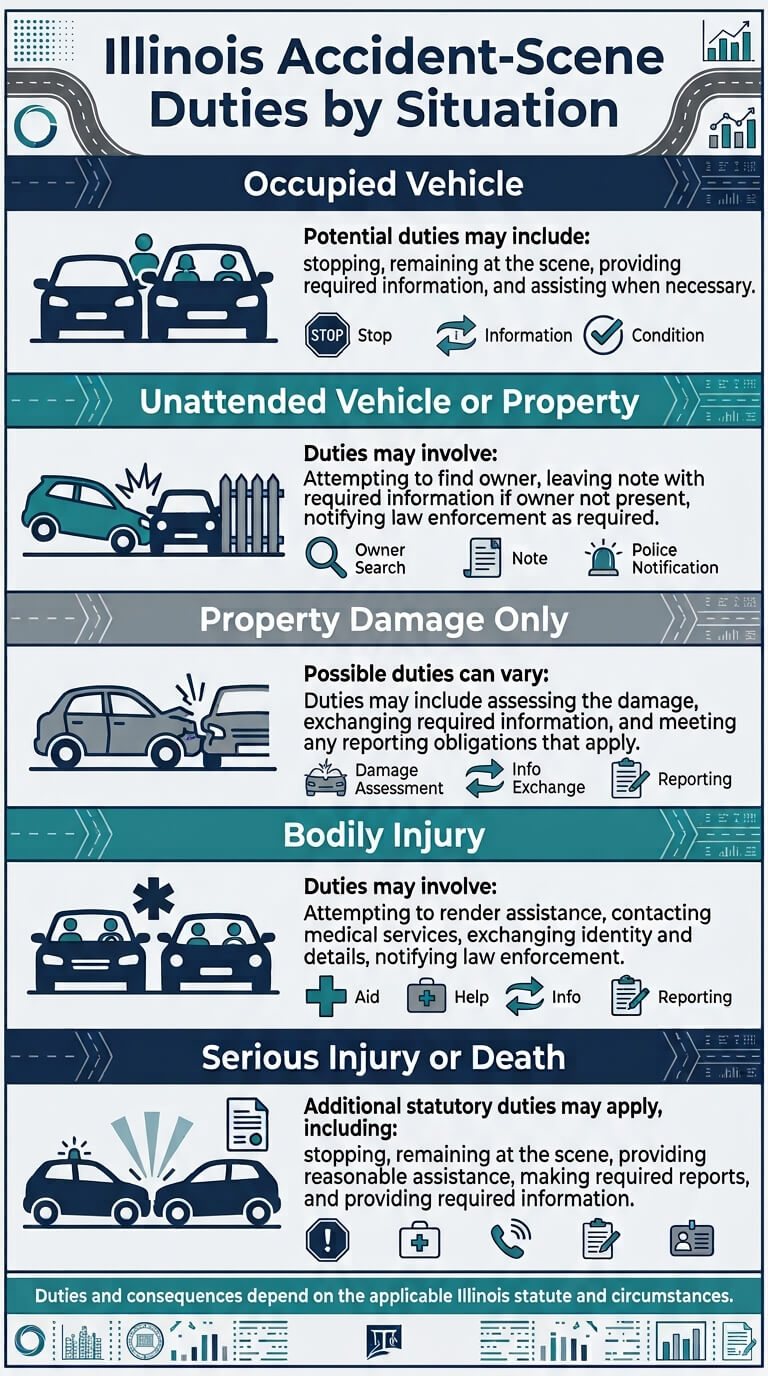
A parking-lot collision involving an unattended vehicle, for example, may create different obligations from a crash in which another driver or passenger is injured.
For that reason, a driver should not rely solely on whether the accident appeared “minor” at the time. The applicable legal duty depends on the circumstances and the Illinois law governing that type of collision.
What Counts as Leaving the Scene of an Accident?
A leaving-the-scene allegation can arise when a driver is accused of failing to satisfy a legal duty after being involved in a collision.
That may include allegations that the driver failed to:
- stop;
- remain at the scene;
- provide required information;
- assist an injured person where required;
- report the accident where required; or
- follow special procedures involving unattended property.
People commonly refer to these situations as hit-and-run cases, although Illinois law may use more specific statutory terminology depending on what happened.
That distinction matters because leaving the scene is not necessarily one single offense with one single penalty.
The legal consequences may depend on factors such as:
- whether another vehicle was occupied;
- whether the damaged property was unattended;
- whether anyone was injured;
- the seriousness of any injury;
- whether the accident resulted in death;
- what the driver knew about the collision; and
- what the driver did afterward.
What If You Hit a Parked or Unattended Car?
A parked-car accident may look less serious because no one was inside the other vehicle, but that does not mean a driver can simply leave without taking any action.
Illinois law can impose obligations when a driver damages an unattended vehicle or other property.
Illinois law sets different requirements depending on the type of crash, including whether the damaged vehicle or property was unattended. But the general principle is straightforward: the absence of another driver at the scene does not necessarily eliminate the duty to identify yourself or report what happened as required by law.
Consider a common situation.
A driver backs into an unattended car in a parking lot. The impact leaves visible damage, but the vehicle owner is nowhere nearby. The driver is late, frightened about insurance costs, and leaves.
That situation raises several separate questions:
- What information should have been provided?
- Was any form of notification required?
- How serious was the property damage?
- Did the driver understand that contact had occurred?
- What actions were taken afterward?
Those facts can affect how the incident is evaluated.
A property-damage accident in Illinois therefore should not automatically be treated as legally insignificant simply because no person appeared to be hurt.
When Can Leaving the Scene Become More Serious?
The potential seriousness of a leaving-the-scene case can increase substantially when an accident involves bodily injury or death.
A property-damage-only case may be handled differently from an accident involving an injured pedestrian, passenger, cyclist, or another driver.
As a general framework:
| Accident Situation | Why It Matters Legally |
|---|---|
| Property Damage Only |
Duties to stop, exchange or provide information, and report may apply. |
| Unattended Property |
Special requirements may apply when the owner is not present. |
| Bodily Injury |
Additional duties may apply, including assistance and reporting. |
| Serious Injury |
Criminal exposure may become substantially more serious. |
| Death |
The most serious leaving-the-scene provisions may apply. |
The misdemeanor or felony classification, sentencing range, and driver’s license consequences depend on the applicable Illinois statute and the circumstances of the crash.
What readers should understand is the broader point: the nature of the harm can significantly change the legal stakes.
What Happens If Police Identify Your Vehicle Later?
Leaving the location of a crash does not necessarily end the investigation.
Law enforcement may later try to identify the vehicle involved and determine who was driving.
Depending on what evidence exists, investigators may look at:
- traffic or intersection cameras;
- business surveillance footage;
- residential security cameras;
- witness statements;
- license plate information;
- automated plate-reader data where lawfully available;
- damage to the vehicles;
- paint transfer or debris;
- repair records;
- insurance information; and
- other physical or digital evidence obtained through lawful investigative methods.
An investigation may continue even after the original scene has been cleared.
Identifying the Vehicle Is Not Always the Same as Identifying the Driver
Evidence showing that a particular vehicle was involved does not automatically answer every question about who was driving it.
Vehicle ownership, driver identity, witness identification, video quality, statements, and other evidence may all become relevant.
That distinction can matter when police identify a registered owner but still must determine who was operating the vehicle at the time of the accident.
Why Do Some Drivers Leave Accident Scenes?
People may leave for many reasons.
Some are frightened. Others are confused, shocked, worried about insurance, concerned about drinking, or unsure whether contact with another vehicle actually caused damage.
Possible reasons include:
- panic;
- shock;
- fear of being arrested;
- concern about alcohol or drug use;
- lack of insurance;
- uncertainty about the severity of the collision;
- fear of financial consequences;
- an outstanding warrant; or
- misunderstanding what the law required.
Those circumstances may help explain a person’s behavior, but they do not automatically erase legal obligations.
Panic can explain a split-second decision, but the legal analysis still depends on what happened, what the driver knew, and what they did afterward.
That distinction allows the situation to be discussed realistically without assuming either guilt or innocence.
What Should You Do If You Already Left the Scene?
If you already left an accident scene and are worried about what happens next, avoid making the situation more complicated through additional poor decisions.
A few general steps may help preserve information while you determine what obligations or legal issues remain.
Preserve Relevant Information
Keep anything that may document what happened, including:
- photographs;
- dashcam footage;
- text messages;
- vehicle-condition records;
- insurance documents;
- repair estimates; and
- other relevant records.
Do not delete, alter, conceal, or destroy information simply because you are worried that it could become part of an investigation.
Be Careful About Social Media
Avoid posting detailed accounts of the accident online.
Statements, photos, location information, or messages posted publicly may later be reviewed by investigators, insurers, lawyers, or other parties.
Avoid Angry or Threatening Contact
If another driver, property owner, or alleged victim is involved, do not escalate the situation with angry messages, threats, or attempts to pressure someone about what they should say.
Consider Legal Advice Before Giving a Detailed Statement
If investigators contact you or you believe criminal charges may follow, consider obtaining legal advice before providing a detailed account of the incident.
That does not mean ignoring lawful requirements or instructions. It means understanding your rights and obligations before making statements that may later become evidence.
Ask About Any Remaining Reporting Duties
Depending on the circumstances, there may still be reporting or other legal obligations that need attention.
Any remaining reporting or other legal obligations depend on the circumstances and applicable Illinois law.
What Penalties Can Follow a Leaving-the-Scene Charge?
The possible consequences depend heavily on what happened during the accident and which Illinois law applies.
Potential consequences may include:
- a misdemeanor or felony criminal charge;
- jail or prison exposure;
- fines;
- probation;
- restitution;
- driver’s-license consequences;
- court costs;
- increased insurance consequences; and
- possible civil liability.
These outcomes are not automatic in every case.
An accident involving only property damage may be treated differently from one involving bodily injury or death. Likewise, the particular charge, criminal history, evidence, and ultimate case resolution can affect what happens.
Criminal and Civil Liability Are Different
A criminal leaving-the-scene case is not necessarily the same as deciding who was responsible for causing the accident.
A driver might face one set of questions about whether they satisfied their legal duties after the crash and another set of questions about fault, insurance, property damage, or personal injury.
Restitution ordered in a criminal case can also be different from a separate insurance claim or civil lawsuit.
What If You Did Not Realize You Hit Something?
This can be one of the most important factual questions in a leaving-the-scene investigation.
A minor impact in a crowded parking lot can feel very different from a high-speed collision. Whether the driver’s awareness matters legally can depend on the particular Illinois offense being charged and the mental state required under that law.
Relevant evidence may include:
- the severity of the impact;
- the amount and location of vehicle damage;
- noise;
- witness accounts;
- surveillance video;
- driver statements;
- whether the vehicle stopped;
- what the driver did immediately afterward; and
- whether the driver later learned that a collision occurred.
The safest way to describe this issue is not to assume that lack of awareness automatically defeats a charge.
Instead, what the driver knew or reasonably perceived may be an important factual and legal issue depending on the offense and the governing Illinois law.
What Issues Can a Defense Lawyer Evaluate?
A leaving-the-scene accusation does not answer every factual or legal question in the case.
A defense lawyer may evaluate several separate issues.
Who Was Driving?
Police may identify a vehicle before they have clear evidence identifying the driver.
A lawyer may review:
- video;
- witness statements;
- admissions;
- vehicle ownership;
- physical evidence; and
- other information connecting a particular person to the vehicle.
Did the Driver Know a Collision Occurred?
If the applicable Illinois law makes knowledge relevant, evidence surrounding the driver’s awareness can become important.
That may include the force of impact, visible damage, sound, witness observations, statements, or conduct afterward.
What Legal Duties Applied?
Different accident types may trigger different statutory duties.
A lawyer may determine whether the case involved:
- an occupied vehicle;
- an unattended vehicle;
- property damage;
- injury;
- serious injury; or
- death.
The applicable duty matters because not every crash is governed in exactly the same way.
Did the Driver Take Any Steps Afterward?
The fact that a person left initially may not be the end of the factual inquiry.
A driver may have returned, contacted law enforcement, provided information, sought medical assistance, notified an insurer, or taken another action that may be relevant to the legal analysis.
How Reliable Is the Evidence?
Surveillance video, vehicle descriptions, license plate information, witness memory, and physical damage can vary substantially in quality.
A defense lawyer may examine whether the evidence actually proves what investigators claim it proves.
Were There Emergency or Unusual Circumstances?
An emergency or unusual circumstance does not automatically excuse leaving an accident scene.
However, a lawyer may evaluate whether the surrounding facts have legal significance under the specific Illinois law involved.
How Can a Naperville Hit-and-Run Lawyer Help?
If police have contacted you, your vehicle has been identified, or you have been charged with leaving the scene of an accident, the legal questions may extend beyond the collision itself.
A Naperville hit-and-run lawyer may:
- review which Illinois accident statute applies;
- determine what legal duties existed after the crash;
- examine surveillance or witness evidence;
- review vehicle-identification evidence;
- assess whether prosecutors can identify the driver;
- evaluate what the driver knew;
- review any driver’s license consequences;
- communicate with investigators where appropriate; and
- explain possible case options based on the available evidence.
No lawyer can guarantee that a charge will be dismissed, reduced, or resolved in a particular way.
The appropriate strategy depends on the facts, evidence, applicable law, and procedural posture of the case.
Accused of Leaving the Scene of an Accident?
A hit-and-run allegation can raise questions about what duties applied, whether anyone was injured, who was driving, and what evidence police are relying on.
If you are facing a leaving-the-scene investigation or charge in Naperville or DuPage County, John W. Callahan, Ltd. can review the circumstances and explain the legal issues that may apply.
The Details Matter
What Happens Next Depends on the Facts
Leaving the scene of an accident does not create the same legal issues in every case, and the consequences can extend beyond the original collision.
What happened?
The type of accident and surrounding circumstances provide the starting point.
Was anyone injured?
Whether the accident involved an injury can affect the legal issues that need to be considered.
What does the evidence show?
What the driver knew, the quality of the identification evidence, and what happened afterward can all affect the legal analysis.
For someone worried about a recent accident, understanding those facts is a more useful first step than assuming the worst based on the phrase “hit and run.”
Concerned That Police May Contact You About Leaving an Accident Scene?
Discuss what happened, what duties may apply, and the next legal steps to consider.