
That tweet, selfie, message, or video could become evidence in a criminal case. After an arrest or investigation begins, online activity may affect how police and prosecutors view the allegations and your defense.
The safer approach is to stop discussing the case online. Talk with your attorney before changing or deleting potentially relevant content.
Why Social Media Matters in a Criminal Case
Social media can reveal photos, messages, timestamps, locations, and connections between people. Investigators may compare that information with witness statements and other evidence.
Police and prosecutors may review Facebook, Instagram, TikTok, Snapchat, X, YouTube, dating apps, and other platforms for:
- Statements about an incident
- Contradictions
- Photos or videos
- Location or timeline information
- Connections between people involved
A harmless-looking post can take on a different meaning when viewed beside other evidence. We want clients to understand that what they meant by a post and how prosecutors interpret it may be very different.
The Most Common Social Media Mistakes After an Arrest
Posting while a case is active can create new information for investigators. An angry response, joke, explanation, or attempt to defend yourself publicly may make the situation harder to manage.
Common mistakes include:
- Discussing charges
- Joking about alleged conduct
- Posting relevant drug, alcohol, or weapon photos
- Arguing with witnesses or accusers
- Making threats
- Discussing legal strategy
- Asking someone to remove content
“I Only Posted It for Friends”
A limited audience does not guarantee privacy. Someone can screenshot a post, save a video, forward a conversation, or show it to another person.
Trying to explain an incident online creates similar risks. Anyone under investigation should understand whether to speak with police without a lawyer before making statements to investigators or posting their version of events.
Can Deleted Posts Still Be Used as Evidence?
Deleting a post does not necessarily eliminate every copy. Screenshots, saved messages, shared media, cloud data, or copies on another person’s device may still exist.
What remains available depends on the platform, type of data, retention practices, and circumstances. Deleted-post evidence therefore requires a case-specific review rather than an assumption that deleted means gone.
Our approach is careful rather than reactive. Illinois law addresses certain conduct involving the destruction, alteration, concealment, or disguise of evidence under its law on obstructing justice. Whether that law applies depends on the facts, so get legal advice before changing or destroying potentially relevant material.
How Prosecutors Use Social Media in Court
Social media evidence may be used to address credibility, intent, location, timelines, relationships, or communications. What particular content proves, and whether it can be admitted, depends on the facts and applicable evidence rules.
Digital material can also raise authentication questions. Illinois has requirements for authenticating evidence that address the showing needed to support a finding that an item is what its proponent claims.
Context can change the picture. Someone facing a false sexual assault accusation in Illinois may have messages, timestamps, or other digital records that deserve careful preservation and review rather than public discussion.
Photos and Videos Can Create Unexpected Evidence
Photos and videos may reveal details the person posting them never noticed. A timestamp, background, location marker, object, or another person in the frame could become relevant to an investigation.
Examples may include:
- Weapons, drugs, or alcohol
- Recorded fights
- Locations connected with allegations
- People involved in an investigation
- Posts made near the time of an alleged offense
An image still needs context. An old photograph does not automatically prove what happened later. Timing, identity, authenticity, relevance, and surrounding circumstances may affect what it actually shows.
Private Messages Are Not Always Truly Private
Private settings limit ordinary access, but they do not guarantee that communications will remain private during an investigation. A recipient can save, screenshot, forward, or voluntarily share a conversation.
Federal law also governs government access to certain communications and records held by service providers. These rules for stored electronic communications may affect how records are obtained, depending on the information, available data, legal process, and facts.
Digital evidence can matter before charges are filed. Illinois white collar crime investigations may involve electronic communications and records, making careful legal guidance useful while an investigation is still developing.
What Not to Do Online During a Criminal Case
Creating less new content is generally safer than trying to control the story online. Our goal is to help clients avoid adding problems while we review the facts and prepare the defense.
What Not to Post During an Active Criminal Case
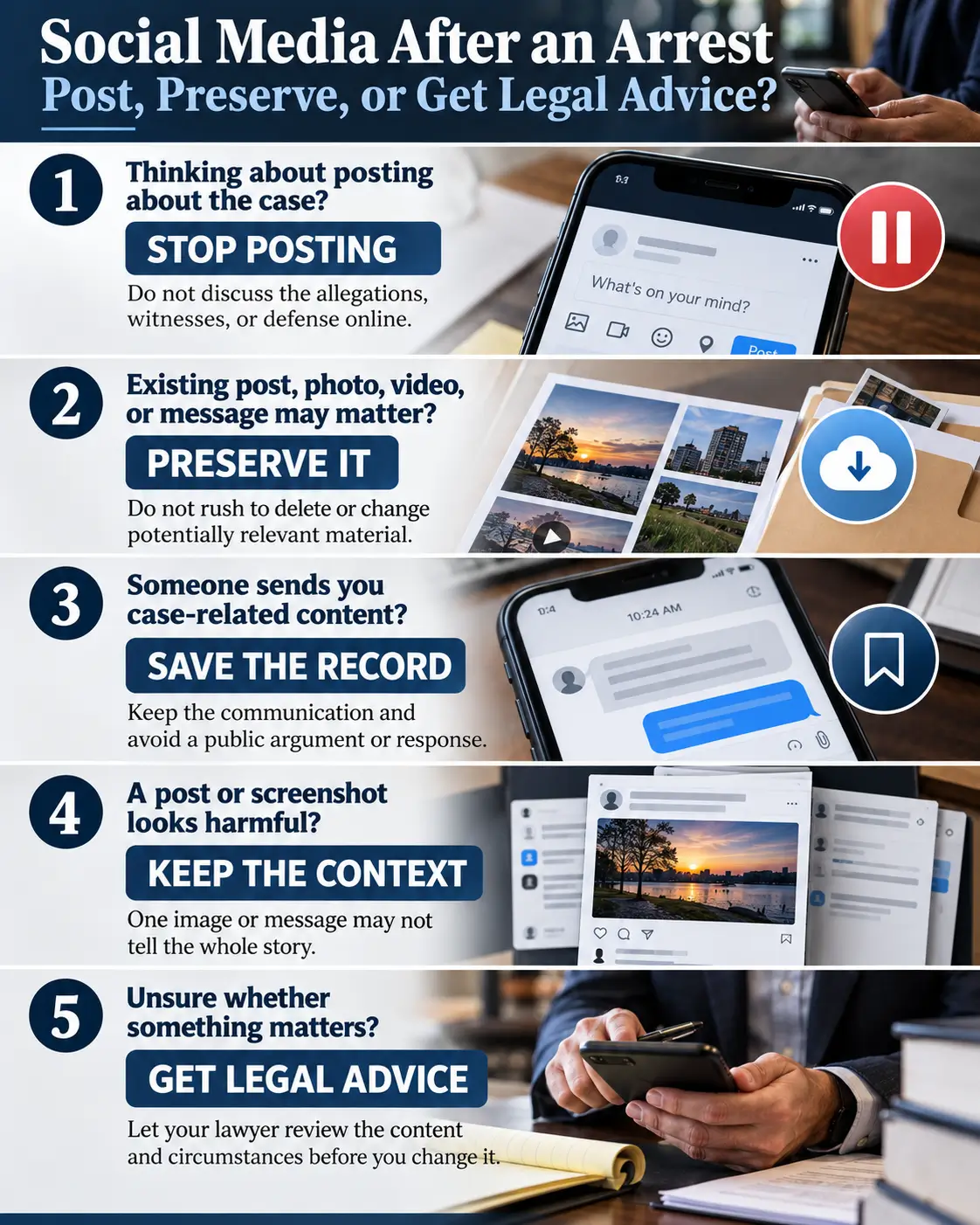
- Do not discuss the allegations.
- Do not argue with witnesses or accusers.
- Do not joke, brag, or make threats.
- Do not discuss defense strategy.
- Do not ask others to delete material.
- Do not assume disappearing content is gone.
- Do not destroy potentially relevant evidence.
Stopping new posts and deleting existing material are different actions. Remaining quiet limits new content, while deleting something may affect potential evidence.
If you need help deciding what to do next, our criminal defense representation focuses on the individual circumstances of the matter. We review what happened, what evidence may exist, and what steps may make sense rather than treating every case the same way.
Can Social Media Ever Help Your Defense?
Yes. Online evidence can sometimes support the defense. Messages, photos, videos, timestamps, or other records may clarify a timeline, identify witnesses, add context, or contradict an allegation.
Someone accused of being at a particular location at a specific time, for example, may have digital records that help clarify the timeline. Their value depends on reliability and the other evidence.
Material that first appears harmful to a criminal case may look different once we examine its source, timing, surrounding communications, and connection with the allegations.
Social Media and Juvenile or Student Criminal Cases
Students can create a lasting digital record with a post made in seconds. Party videos, fights, prank content, drug-related posts, threats, cyberbullying allegations, and group chats may attract attention during an investigation.
A short video may omit what happened beforehand, and a repost does not necessarily show who created the original material. Students and parents should avoid public defense campaigns or rushed attempts to clean up accounts before getting legal advice.
How a Naperville Criminal Defense Lawyer Handles Digital Evidence
A defense lawyer should look beyond one screenshot or post. Our approach starts with the specific facts: what the material shows, when it was created, who was involved, what surrounding records exist, and how everything relates to the allegations.
Clients considering representation can review our criminal defense attorneys and their professional backgrounds. John W. Callahan brings more than 30 years of legal experience, with careful preparation and individual attention central to our approach.
The firm’s license reinstatement case results provide additional background on that area of our practice. Those results should not be read as a prediction of any criminal-defense outcome, since every legal matter depends on its own facts.
Social Media Mistakes Can Outlive the Original Arrest
Online activity can take on new significance after an arrest. Do not panic or rush to erase an account. Stop creating case-related content, preserve potentially relevant material, and get legal advice before changing something that could matter.
Digital evidence may hurt or help a defense. We focus on understanding what exists, putting it in context, and preparing around the facts rather than making assumptions about one post or message.
Protect Your Criminal Case Before Posting Again
One new post can create another issue in your criminal case. Staying quiet online can prevent new statements from adding to the questions your defense already needs to address.
Our team takes a hands-on approach to preparation and can review how digital evidence fits with your circumstances. Request a legal consultation to discuss possible next steps, or call (630) 625-8491.